What is an Offshore company in the UAE?

What is an Offshore company in the UAE?

An offshore company is a legal entity registered in one of the UAE’s offshore jurisdictions, designed for conducting international business and managing assets outside the country. These companies cannot directly engage in trade or provide services within the UAE, but they are ideal for capital protection, international trade, holding structures, and tax planning.

Offshore company registration allows foreign investors to fully own a business, providing a high level of privacy and legal protection. This format is particularly relevant for holdings, investors, online businesses, and financial and consulting structures that require quick and convenient access to international markets.

Why choose an Offshore Company

Full business ownership by a foreign investor
One of the main advantages of Offshore is the ability of a foreign entrepreneur to fully own their company. There is no need to involve a local partner or sponsor, which provides full control over the business, free decision-making, and maximum independence in asset management.

Tax advantages
Offshore companies in the UAE are not subject to corporate or income tax. This makes them an effective tool for tax planning and financial flow optimization. This format is particularly useful for holdings, international investors, and global traders, as it allows for maximum profit retention and simplifies financial management.

Privacy and asset protection
Offshore companies provide a high level of confidentiality. Information about owners and financial transactions is protected by law, which makes this format attractive for investors who want to secure their assets and hide their ownership structure.

Minimum requirements for the office and staff
For Offshore companies, there is no mandatory requirement to rent office space or hire employees in the UAE. Business management is possible entirely remotely, which greatly simplifies international operations and reduces operational costs.

Convenience of international operations
Offshore companies make it easy to open corporate bank accounts both in the UAE and abroad, conduct transactions with foreign counterparties, and enter into international contracts. This makes them ideal for global trade, investment management, and conducting business in multiple countries simultaneously.

Flexibility of the company structure
Offshore companies provide the opportunity to create holding structures, subsidiaries, and specialized legal entities. This gives entrepreneurs flexibility in organizing their business, distributing assets, and managing corporate flows internationally.

The process of registering an Offshore company

The registration of an offshore company includes the following steps:

  1. Choosing an offshore zone
  2. Preparation of documents for founders and beneficiaries — passports, address confirmation, and founding documents.
  3. Application submission and payment of registration fees — after checking the documents, the registration authority issues a certificate of registration and the company’s charter.
  4. Opening a corporate bank account-Offshore A company can open an account in the UAE or abroad.
  5. Assign a local agent or registrar for administrative support and mandatory reporting (if necessary).

Advantages of an Offshore company

Quick and easy registration (from 5 to 15 business days)
Registration of an offshore company in the UAE takes minimal time compared to other forms of business. The process of processing documents, submitting applications and obtaining a company certificate usually does not exceed two weeks, which allows investors to quickly launch international projects.

Ability to conduct international business and manage assets
Offshore companies are designed to work with international markets. They are ideal for managing investments, contracting with foreign partners, and conducting global trade. This format provides maximum freedom of action outside the UAE.

Full repatriation of capital and profits without restrictions
Owners of Offshore companies can freely transfer capital and profits abroad without any restrictions. This makes them a convenient tool for holding companies, investment funds, and entrepreneurs who work with foreign clients and investors.

Easy creation of holding structures and ownership of intellectual property
Offshore company allows you to create holdings, subsidiaries, and manage assets, including patents, brands, and copyrights. This is especially useful for international investors, IT companies, and owners of creative projects.

Access to the international banking system and global markets
Offshore registration facilitates the opening of bank accounts both in the UAE and abroad, provides access to international financial infrastructure, and simplifies transactions in global markets.

Disadvantages of an Offshore company

Impossibility of direct activity in the local UAE market
Offshore companies are not allowed to sell goods or provide services directly within the Emirates. Local agents or intermediaries must be used to enter the domestic market.

No access to government tenders and contracts in the Emirates
Participation in government projects and tenders is not possible, as the Offshore company focuses exclusively on international operations.

Bank requirements may be more complex
Opening a corporate bank account for an offshore company sometimes requires more documents and confirmations than for mainland or free zone companies. The bank may ask for additional information about the owners and the business structure.

Limited opportunities for physical operations
In Offshore, a company does not have the right to have an office, warehouse, or employees within the UAE without creating an additional structure. This limits the company’s use for local business and physical asset transactions.

No visa quota is allocated
An offshore company does not give the right to apply for resident visas for its owners or employees. To obtain visas, you will need to register with another company, such as a Free Zone or Mainland company.

Conclusion

Offshore companies in the UAE are a convenient and profitable tool for international investors, holdings, online businesses, and financial structures. They provide a quick start, full ownership of the company, tax benefits, asset protection, and an international focus.

However, for entrepreneurs who plan to operate in the local market, sign contracts with government or private organizations, conduct physical operations in the Emirates, or issue visas for their employees, Mainland or Free Zone company remains a more suitable choice.

What is a Free Zone company in the UAE?

What is a Free Zone company in the UAE?

Free Zone (Free Economic Zone) is a special jurisdiction established in the UAE to attract foreign investment and develop various sectors of the economy. Today, there are more than 40 free zones in the country, each with its own rules, regulator, and specialization: trade, IT, finance, logistics, media, education, and others.

Companies registered in free zones are primarily focused on international markets, but they can also operate within the UAE under certain conditions.

Advantages of registering a company in the Free Zone

The main advantage of registering a business in a free zone is the possibility of full ownership of the company without involving a local partner. In addition, companies in the Free Zone enjoy significant tax benefits: corporate tax is either completely absent or applied to a minimum extent, there is no personal income tax, and the repatriation of capital and profits is allowed without restrictions.

The registration process in most free zones is quite simple and takes only a few days to a couple of weeks. Each zone also creates its own business ecosystem, offering infrastructure, office space, logistics and services for companies in specific industries. Entrepreneurs can choose different types of licenses — commercial, service, industrial, educational, and others. Additionally, companies get the opportunity to issue visas for owners and employees.

Disadvantages of Free Zone

Despite its many advantages, this business format also has its limitations. Companies from free zones have limited access to the local market: trading and providing services in the UAE mainland often requires working through an agent or distributor.

Working conditions in different zones differ: The cost of licenses, office requirements, and available activities can vary greatly, which sometimes makes it difficult to choose a suitable zone. In addition, Free Zone companies are rarely suitable for large projects, as access to government tenders and contracts is most often only possible through a mainland company. In some cases, there are additional costs if you need to obtain permits to work outside the zone itself.

Free Zone Company Registration Process

Registration of a company in a free zone goes through several consecutive stages:

  1. Choosing the appropriate zone and type of activity — at this stage, the entrepreneur determines the industry, business goals and the required type of license.
  2. Reserving a company name means checking its uniqueness and agreeing with the regulator.
  3. Preparation of documents — constituent documents, copies of founders ‘ passports, visas (if any), office or virtual office lease agreement.
  4. Submission of an application and payment of registration fees — after checking the documents, the zone issues a license and registration.
  5. Opening a corporate bank account — getting an account for conducting transactions and transfers.
  6. Obtaining visas for owners and employees — if necessary, the company can issue resident visas.

The process of registering a Free Zone company usually takes from 1 to 14 days, depending on the chosen zone and type of activity.

Types of activities and licenses

Free Zone companies can engage in a wide variety of activities. The main license categories include:

  • Commercial license — trade in goods, distribution, wholesale and retail trade.
  • Service License — professional services: consulting, marketing, IT, and creative industries.
  • Industrial/production license — production of goods, assembly, and processing.
  • Educational License — courses, training, and workshops.
  • Media and Creative License — Advertising, content, digital, and media services.

Each free zone offers its own unique features and requirements for the selected license, including minimum office size, mandatory equipment, and permits for specific industries.

Conclusion

Free Zone companies in the UAE are the optimal solution for international trade, online business, consulting, startups, IT, and creative industries. They allow you to get started quickly, with minimal costs and maximum benefits.

Mainland company in the UAE: what is it and why is it chosen?

Mainland company in the UAE: what is it and why is it chosen?

Business registration in the United Arab Emirates is an important step for any entrepreneur who wants to enter the international market, reduce tax risks, and ensure the stability of their project. Among the various forms of business, Mainland Company holds a special place. This is a legal entity registered in the mainland territory of the country through local economic departments, such as the Department of Economy & Tourism (DET) in Dubai.

Unlike companies in free economic zones (free zone), such structures allow you to conduct activities throughout the Emirates, work directly with local customers and government organizations. That is why the mainland has long been the optimal choice for those who plan not only to export services and goods, but also to gain a foothold in the domestic market.

Legal status and features of ownership

Just a few years ago, foreign entrepreneurs had to attract a local sponsor who would own 51% of the company. Today, the rules have changed: UAE law allows 100% foreign ownership for most activities. This makes the registration process more transparent and convenient, while maintaining strict requirements for compliance with compliance standards and corporate regulations.

Types of activities and licenses

When creating a mainland company, an investor can choose from thousands of types of economic activity. The most popular options include:

  • commercial activity — trade, wholesale and retail operations;
  • professional services — consulting, marketing, IT development, creative industries;
  • production and industry — creation and processing of goods;
  • tourism and service — hotel business, agency services, and much more.

Each company is required to obtain a license that corresponds to its activities. This document confirms the right to work in the territory of the Emirates and conclude contracts with clients and partners.

Why Entrepreneurs choose a Mainland company

The main advantage of registering a company in the UAE mainland is the maximum freedom of doing business. Unlike companies established in free economic zones, mainland companies can operate without geographical restrictions: provide services, sell goods, and enter into transactions throughout the country. This is especially important for those entrepreneurs who aim to work directly with local markets and end-users within the Emirates.

Another significant advantage is access to government tenders and large contracts with leading national corporations. For many businesses, the opportunity to participate in large-scale projects becomes a key factor when choosing a mainland jurisdiction, as free zone companies are usually deprived of such opportunities.

In addition, registering in mainland offers a wide range of business expansion opportunities: entrepreneurs can choose from more than a thousand types of activities, including commercial, service and professional areas. This flexibility allows you to adapt your business to meet market demands and scale it without restrictions.

Finally, companies registered in mainland enjoy a high level of trust from local banks, investors, and financial institutions. This simplifies the process of opening corporate accounts, obtaining financing, and establishing partnerships, creating a solid foundation for stable and transparent business operations.

Mainland company registration includes several steps: choosing an activity, reserving a name, renting or confirming an office, submitting documents, and obtaining a license. After that, the entrepreneur can open a bank account, apply for visas for themselves and their employees, and, if necessary, register for tax purposes (such as VAT or corporate tax).

It is worth noting that such companies require a real address. The size of the office directly affects the number of visas that the company can sponsor. This factor becomes important for businesses that plan to hire employees and expand.

Mainland or Free Zone: Which is better?

The choice depends on the goals. Free zone is suitable for companies focused on international trade and exports, as well as those who want to benefit from preferential tax regimes. Mainland, on the other hand, remains a versatile tool for those who plan to actively participate in the UAE’s domestic market and work with government or large private clients.

Conclusion

Mainland company in the UAE is a solution for those who have long-term goals: development in the local market, international partnerships, and building trusting relationships with local authorities and banks. This structure provides maximum business freedom, and thanks to modern reforms, the registration process has become even more accessible for foreign investors.

If you are planning to establish a company in Dubai or any other emirate, choosing mainland is a step towards stability, growth, and global opportunities.

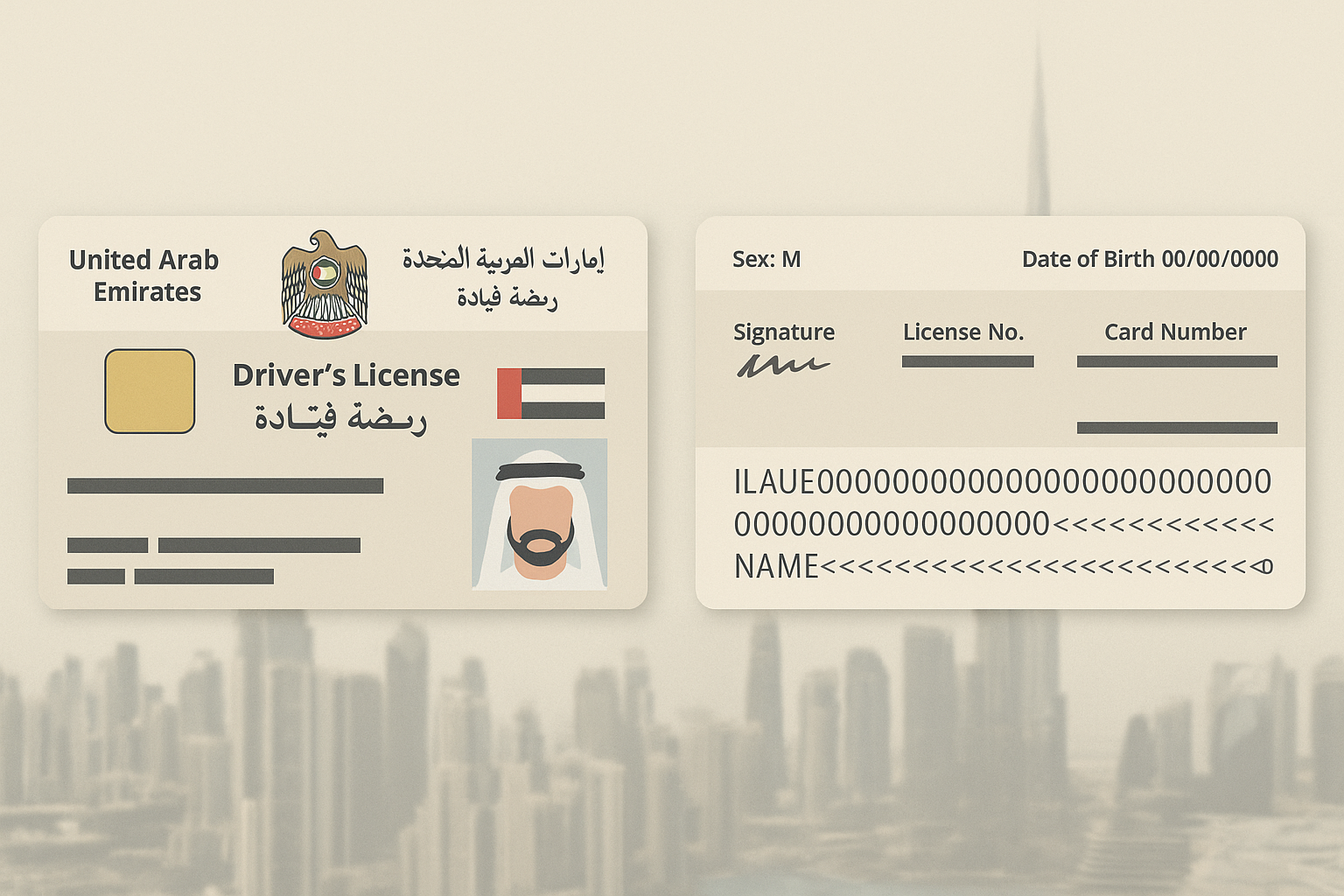
How to get a driver’s license in the UAE

How to get a driver’s license in the UAE

Obtaining a driver’s license in the United Arab Emirates (UAE) is an important step for residents and expats seeking freedom of movement and independence. The process of obtaining an identity card includes several stages, each of which requires attention to detail and compliance with established rules. Requirements and required documents:

  • A copy of the passport with the resident’s visa.
  • Emirates ID.
  • Medical certificate of vision status.
  • Passport-sized photos.
  • Letter of Consent (NOC) from the sponsor, if required
    Stages of obtaining a driver’s license
  1. Choosing a driving school
    Enroll in an accredited driving school approved by the Department of Roads and Transportation (RTA). Popular schools include Emirates Driving Institute, Belhasa Driving Center and Dubai Driving Center.
  2. Opening the driver’s dossier
    Apply for a driver’s license at the driving school, providing all the necessary documents.
  3. Theory classes and exam
    Take a theoretical course covering traffic rules, signs, and the basics of safe driving. After completing the course, take a theoretical exam consisting of 35-40 questions. To be successful, you must correctly answer at least 30 questions.
  4. Practical exercises
    The number of practical sessions depends on your experience:

Beginners: 20-40 hours.
Drivers with experience: 10-20 hours.
Classes include learning how to drive, park, maneuver, and follow traffic rules.

  1. Driving exams
    After completing the practical exercises, you will have to take several exams:
    Parking test: assessment of parking skills in various conditions.
    City Driving Test: assessment of the ability to drive a car in real road conditions.
  2. Getting a driver’s license
    After successfully passing all the exams, you will receive a driver’s license valid in the UAE.
    The cost of obtaining a driver’s license
    The total cost of obtaining a driver’s license in the UAE varies depending on the chosen driving school and the number of classes required.:([miraestate.ae][4])
    Opening the driver’s dossier: ~200 AED.
  • Medical report: 140-180 AED.
  • Theoretical classes: 200-400 AED.
  • Practical exercises: 100-150 AED per lesson.
  • Total cost: from 4,500 to 7,000 AED.
    What to do if you fail the exam
    If you did not pass the driving test on the first attempt, you will need to take additional classes (usually at least 7 lessons) before retaking. Each additional lesson is paid separately.


The Golden Chance Program

The Golden Chance program is available for holders of valid driver’s licenses from certain countries, which allows them to take only theoretical and practical exams without compulsory training in a driving school. This can significantly reduce the time and cost of obtaining local rights. You can read about the list of countries in our next articles.

Job Search in the UAE: A Complete Guide

Job Search in the UAE: A Complete Guide

The UAE offers a variety of employment opportunities for both local residents and foreign professionals. The following are the main ways to find a job in the country:

  1. Registration on online job portals
    There are many public and private online platforms where relevant vacancies are posted.:
  • Government portals:
    o Federal Job Portal
    o Dubai Careers
    o Abu Dhabi Government JobsUAE+1UAE+1
  • Private portals:
    o Bayt
    o NaukriGulf
    o GulfTalent
    o Dubizzle
    Registration on these platforms is free, however, some of them may offer paid additional services.
  1. Business visa for job search
    Foreign citizens can apply for a visa to find a job without having to have a sponsor in the country. The validity period of such a visa can be 60, 90 or 120 days. To obtain a visa, you must meet certain criteria, including the level of qualifications and education. More information about the requirements and the application process can be found on the official portal of the UAE Government.
  2. Recruitment agencies
    You can send your resume to licensed recruitment agencies in the UAE. Agencies will contact you if there are suitable vacancies. It is important to note that applicants are not required to pay for agency services; all costs are borne by employers. The list of licensed agencies is available on the official website of the UAE Government.
  3. Participation in job fairs
    Job fairs are regularly held in the UAE, providing an opportunity to communicate directly with company representatives and find out about available vacancies. Such events are especially useful for recent graduates and those who are looking for their first job. Information about the upcoming fairs can be found on the official portal of the UAE Government.
  4. Search through media ads
    Many jobs are published in the classifieds sections of local newspapers and online platforms.:
    • Khaleej Times
    • Dubizzle
    • Waseet
    These resources are useful both for local job seekers and for those who are looking for work from abroad.


Useful tips

  • Be careful with scammers: Never pay for employment services; in the UAE, this is the employer’s responsibility.
  • Update your resume: Make sure that your resume meets the requirements of the chosen job and contains up-to-date information.
  • Study the labor market: Understanding the professions and industries in demand will help you focus your efforts on the most promising areas.

By following these recommendations and using the available resources, you will increase your chances of successful employment in the UAE.

Labor legislation in the UAE private sector: The main provisions

Labor legislation in the UAE private sector: The main provisions

Federal Decree-Law No. 33 of 2021 on the Regulation of Labor Relations (hereinafter referred to as the UAE Labor Code) regulates the rights and obligations of employees and employers in the private sector. The law entered into force on February 2, 2022, replacing the previous Law No. 8 of 1980. Its purpose is to ensure a balance of interests between the parties to the employment relationship and create a transparent legal environment.
Scope of application
The UAE Labor Code applies to all employees in the private sector, regardless of their nationality (UAE citizens and foreigners). However, the following categories are excluded from the law:

  • Employees of federal and local government agencies.
  • Military, police and security personnel.
  • Domestic workers (there is a separate law for them — Federal Decree-Law No. 9 of 2022).
    The main provisions of the law
  1. Employment models
    The law introduces various forms of labor relations:
  • Full-time employment.
  • Part-time employment.
  • temporary work.
  • Flexible schedule.
    Indefinite employment contracts have also been abolished; now only fixed-term contracts with the possibility of extension are concluded.
  1. Working hours and overtime
    The standard length of the working day is 8 hours, and the working week is 48 hours. During Ramadan, working hours are reduced by 2 hours per day. Overtime work is paid in accordance with established standards.

The main provisions of the law

Employment models
The law introduces various forms of labor relations:

  • Full-time employment.
  • Part-time employment.
  • temporary work.
  • Flexible schedule.
    Indefinite employment contracts have also been abolished; now only fixed-term contracts with the possibility of extension are concluded.
  1. Working hours and overtime
    The standard length of the working day is 8 hours, and the working week is 48 hours. During Ramadan, working hours are reduced by 2 hours per day. Overtime work is paid in accordance with established standards.
    The law prohibits:
  • Forced labor.
  • Discrimination based on gender, race, skin color, religion, national or social origin, disability.
    Harassment, intimidation, physical and psychological violence in the workplace.
    Employers are required to ensure occupational safety, keep records of employees, and comply with minimum wage standards.
  1. Termination of employment relations
    An employment contract may be terminated on the following grounds:
  • Expiration of the contract without renewal.
  • Mutual consent of the parties.
  • The initiative of one of the parties in compliance with the terms of the notification.
  • Death of an employee or employer, bankruptcy of a company, and other circumstances prescribed by law.

    Upon termination, an employee is entitled to compensation for unused vacation and severance pay.

    Bodies regulating labor relations:
    The Ministry of Human Resources and Emiratisation (MoHRE) is responsible for overseeing compliance with labor laws in the private sector. It provides information on the rights and obligations of the parties, examines labor disputes and ensures the protection of workers’ rights.

Termination of employment in the UAE: rights, procedures and compensation

Termination of employment in the UAE: rights, procedures and compensation

In the United Arab Emirates (UAE), termination of employment is regulated by Federal Decree-Law No. 33 of 2021, which entered into force on February 2, 2022 and defines the rules for the private sector. The law ensures a balance of interests between employers and employees by establishing clear procedures and guarantees.
Grounds for termination of an employment contract.

According to article 42 of the law, an employment contract may be terminated in the following cases:

    • Expiration of the contract without its renewal.
    • Mutual written consent of the parties.
    • The initiative of one of the parties, subject to the observance of the notification period.
    • The death of an employer or employee, if this affects the ability to fulfill obligations.
    • Permanent disability of the employee, confirmed by a medical report.
    • Liquidation of the company or bankruptcy of the employer.
    • The inability to extend the work permit for reasons beyond the control of the employer.

Notification period
The standard notification period is from 30 to 90 days, depending on the terms of the agreement. If one of the parties does not comply with this period, it is obliged to pay compensation equal to the salary for the corresponding period.
Termination without notice:
In certain cases, it is possible to terminate an employment contract without notice.

From the employer’s side:

  • Provision of forged documents by the employee.
  • Violation of labor discipline or causing damage to the employer.
  • Absence from work for no valid reason for more than 20 days a year or more than 7 consecutive days
    On the part of the employee:
  • Non-compliance by the employer with the terms of the contract.
  • Physical or moral abuse by the employer.
  • Dangerous working conditions that threaten the health or life of an employee
    Illegal dismissal
    According to article 47 of the law, dismissal is considered illegal if an employee was dismissed for:
  • Filing a complaint with the Ministry of Human Resources and Emiratisation (MoHRE).
  • Initiating legal proceedings against the employer.
    In such cases, the employee is entitled to compensation.
    Compensation for dismissal
    Employees who have worked for more than one year are eligible for severance pay.:
  • 21 days of base salary for each of the first five years of employment.
  • 30 days of base salary for each subsequent year.
    They are also paid:
  • Compensation for unused vacation time.
  • Salary for the time worked.
  • Any other payments due
    Rights and obligations of the parties
    The employer must:
  • Provide a written notice of termination of the contract.
  • Pay all amounts due within 14 days from the date of dismissal.
  • Ensure compliance with all terms of the contract and legislation.
  • Conclusion
  • Termination of employment in the UAE requires strict compliance with the law. Knowing your rights and responsibilities helps you avoid legal problems and ensures that both parties are treated fairly.
  • For more information and advice, it is recommended to contact the Ministry of Human Resources and Emiratisation (MoHRE).

How to make a will in the UAE: a detailed guide for residents and expats

How to make a will in the UAE: a detailed guide for residents and expats

If you are planning to rent an apartment or commercial premises in Dubai, registration of a lease agreement in the Ejari system is a mandatory procedure. This provides legal protection for both the tenant and the landlord, and is also necessary to connect utilities and meet other administrative requirements.

What is Ejari?

Ejari (translated from Arabic as “my rental agreement”) is an online system introduced by the Real Estate Regulatory Agency (RERA) to regulate the rental market in Dubai. The system ensures transparency and fairness by integrating lease agreements into the legal system, and protects the rights of both parties in case of disputes.
Why do I need to register in the Ejari system?

Registration in the Ejari system is necessary for several reasons:

  1. Legal protection: A registered lease ensures your rights in the event of a dispute with the landlord.
  2. Connecting Utilities: An Ejari certificate is required to activate water and electricity through the Dubai Electricity and Water Authority (DEWA).
  3. Requirements of management companies: Many management companies require an Ejari certificate before providing their services.
  4. Renewal of the family members’ visa: to extend the family members’ visa, it is necessary to confirm a sufficient number of bedrooms in the accommodation, which is reflected in the Ejari certificate.
  5. Registration or renewal of a commercial license: a valid Ejari certificate is required for commercial use of the premises.
    How do I register a lease agreement in the Ejari system?
    There are several ways to register a lease agreement in the Ejari system:
  6. Through Wasl: If you rent a property from a Wasl company, they can take over the registration process after completing or extending the lease through their electronic services and paying the appropriate fees.
  7. Through the Dubai REST app: The official Dubai Government real estate management app.
  8. Through the official DLD website: Registration is possible through the official website of the Dubai Department of Land Resources.
  9. In person at the Ejari Center: You can visit one of the Ejari centers in Dubai to complete all the formalities.

Required documents for registration

To successfully register a lease agreement in the Ejari system, you will need the following documents:

  • A copy of the signed lease agreement.
  • Emirates Tenant’s ID.
  • A copy of the tenant’s passport.
  • A copy of the tenant’s visa.
  • A copy of the landlord’s passport (with a visible signature).
  • A copy of the title deed provided by the landlord.
    Note: If you are renewing your registration with the Ejari system, you will also need to provide a recent utility bill from DEWA.
    Tips for successful registration
  • One main tenant: registration must be made for one main tenant, even if the apartment is rented jointly.
  • Landlord’s documents: If the landlord cannot sign the documents personally, provide high-quality scans of the required documents.
  • Duration of contracts: avoid overlapping deadlines between the end of the current contract and the start of a new one.
    Registration fee
  • Registration fee in the Ejari system: 120 dirhams UAE.
  • Additional fees: Additional fees are possible depending on the chosen registration method and the services provided.
    Registering a rental agreement in the Ejari system is an important step to ensure your rights and access to the necessary services in Dubai. By following these recommendations and preparing all the necessary documents, you will be able to successfully complete the registration process.

How to make a will in the UAE: a detailed guide for residents and expats

How to make a will in the UAE: a detailed guide for residents and expats

Making a will in the United Arab Emirates (UAE) is an important step to ensure that your property and assets are distributed according to your wishes after death. This is especially true for expats, since in the absence of a will, inheritance may be governed by Sharia law, which may not correspond to personal preferences.

Legal basis

The UAE has various laws governing inheritance:

  • Personal status: For Muslims, inheritance is governed by Sharia law.
  • For non-Muslims: From 2020, non-Muslims can choose to apply their country’s legislation to inheritance, marriage, and divorce.
    It is important to note that without a will, property can be distributed according to Sharia law, which can lead to unexpected consequences for the heirs
    of the Will Requirement.
    In order for a will to be recognized as valid in the UAE, the following conditions must be met:
  • Age: The testator must be at least 21 years old.
  • Legal capacity: The testator must be sane and fully aware of the consequences of his actions.
  • Form: The will must be drawn up in writing.
  • Language: If a will is filed in the courts of Dubai or Abu Dhabi, an Arabic translation is required. The DIFC allows the drafting of a will in English

Probate registration options

There are several jurisdictions in the UAE for the registration of wills:

  1. Dubai Courts
  • Suitable for: Muslims and non-Muslims.
  • Language: Arabic.
  • Process: Requires notarization and translation into Arabic.
  • Cost: More affordable compared to other jurisdictions.
  1. DIFC Wills Service Centre
  • Suitable for: Non-Muslims.
  • Language: English.
  • Process: Allows the registration of wills covering movable and immovable property, as well as the appointment of guardians for minor children.
  • Cost: About 15,000–20,000 dirhams
  1. Abu Dhabi Judicial Department (ADJD)
  • Suitable for: Residents of Abu Dhabi.
  • Language: Arabic.
  • Process: Similar to the process in Dubai courts, with the need for translation and notarization.
    Appointment of guardians
    In a will, you can appoint guardians for minor children. This is especially important for expats to avoid the automatic appointment of guardians according to Sharia law.

How to issue a power of attorney in the UAE: a detailed guide for residents and expats

How to issue a power of attorney in the UAE: a detailed guide for residents and expats

The registration of a Power of Attorney (POA) in the United Arab Emirates (UAE) is an important legal process that allows one person (principal) to empower another (trustee) to act on his behalf in various fields. This may be necessary for managing property, running a business, representing interests in court, and other situations.
Types of power of attorney in the UAE
There are various types of power of attorney in the UAE, each of which is designed for specific purposes.:

  1. General Power of Attorney (General POA): Provides the trustee with broad powers to manage the trustee’s affairs, including financial and legal aspects.
  2. Special Power of Attorney (Special POA): Restricts the powers of the trustee to certain actions, such as selling real estate, driving a vehicle, or representing in court.
  3. Corporate Power of Attorney (Corporate POA): Used by companies to appoint representatives authorized to act on behalf of the organization in certain matters.
    The process of issuing a power of attorney
    The registration of a power of attorney in the UAE includes several key steps:
  4. Preparation of the document: Drafting the text of the power of attorney indicating the powers of the authorized representative.
  5. Translation into Arabic: For official use in the UAE, the power of attorney must be in Arabic or have a certified translation.
  6. Notarization: The power of attorney must be notarized. In the UAE, this can be done both in person and online through the notary’s electronic system.
  7. Legalization (if necessary): If the power of attorney is issued outside the UAE, it may need to be legalized at the UAE Consulate and the UAE Ministry of Foreign Affairs.
    Online registration of a power of attorney
    Recently, an online power of attorney service has been available in the UAE. This is especially convenient for those who are outside the country. The process includes a video conference with a notary public to confirm the identity and intentions of the principal. After that, the document is certified and becomes legally valid in the UAE.
    Important points
  • Validity period: The power of attorney may be indefinite or have a limited period of validity, depending on the conditions specified in the document.
  • Revocation of the power of attorney: The Trustee has the right to revoke the power of attorney at any time by notifying the trustee and the relevant authorities.
  • Legal assistance: It is recommended to contact qualified lawyers to draw up and execute a power of attorney in order to avoid legal errors and misunderstandings
Enter your phone number
We will contact you as soon as possible and select a suitable offer.
Enter your phone number
We will contact you as soon as possible and select a suitable offer.
Оставьте номер телефона
мы свяжемся с вами в ближайшее время и подберем подходящее предложение
Оставьте номер телефона
мы свяжемся с вами в ближайшее время и подберем подходящее предложение